Sports App Development Company for Modern Fitness & Performance Platforms
We design and build scalable sports and fitness software - from consumer training apps to team-management platforms and wearable-connected performance systems - for founders, gyms, federations, and sports-tech companies.
Sports and fitness software development is a specialised branch of custom software development shaped by real-time biometric data, device fragmentation, and behaviour that has to survive weeks of low motivation, not just a single session. It differs from generic app work in its data layer, its integration surface, and the retention mechanics it has to support.Fitness software development spans consumer training apps, gym and studio management systems, team and league operations platforms, wearable-connected performance tools, and marketplace apps connecting athletes with coaches. Each category has its own data model, its own compliance profile, and its own idea of what "engagement" actually means.
02 · Compliance
Compliance & Security in Sports & Fitness Software
Fitness platforms sit at the intersection of health data, payments, and - increasingly - minors' data, which puts them under tighter obligations than most consumer software categories.
Area
Focus
Health & Biometric Data
GDPR, HIPAA-aware design
Payments & Subscriptions
PCI DSS
Youth Sports Data
COPPA-aware flows
Wearable & API Security
Device-level auth, token scoping
Biometric data, handled deliberately.
Heart-rate, GPS, sleep, and body-composition data are treated as sensitive by design, not flagged after a legal review. We scope data retention windows, anonymise data used for model training, and build consent and export flows as core product features from sprint one - the same discipline we apply to any custom sports software development engagement that touches personal health metrics.
Output → privacy-ready performance data pipeline
03 · Process
Sports & Fitness Development Process
Delivery
Sports & Fitness Development Process
We follow a six-stage delivery process refined across 40+ sports and fitness engagements. Each stage has a defined output and a sign-off gate - nothing moves forward until the previous stage is confirmed.
functional & performance testing, security testing, cross-device & wearable QA, load testing for live events
05
Launch and Onboarding
staged rollout with feature flags, coach & admin documentation, 30-day hypercare support
06
Optimisation
monthly analytics reviews, A/B testing on retention, quarterly roadmap update
04 · What we build
Types of Sports & Fitness Solutions We Build
Sports-tech is not one product category. We design and build custom sports software across formats that each carry their own retention logic, monetisation model, and data architecture.
Fitness & Training Apps
01
Workout planning, progress tracking, and coached or self-guided training programmes. Personalised plans, video-guided sessions, and adaptive load adjustment based on logged performance and recovery data. *Stack: iOS · Android · React Native · HealthKit / Health Connect*
Gym & Studio Management Platforms
02
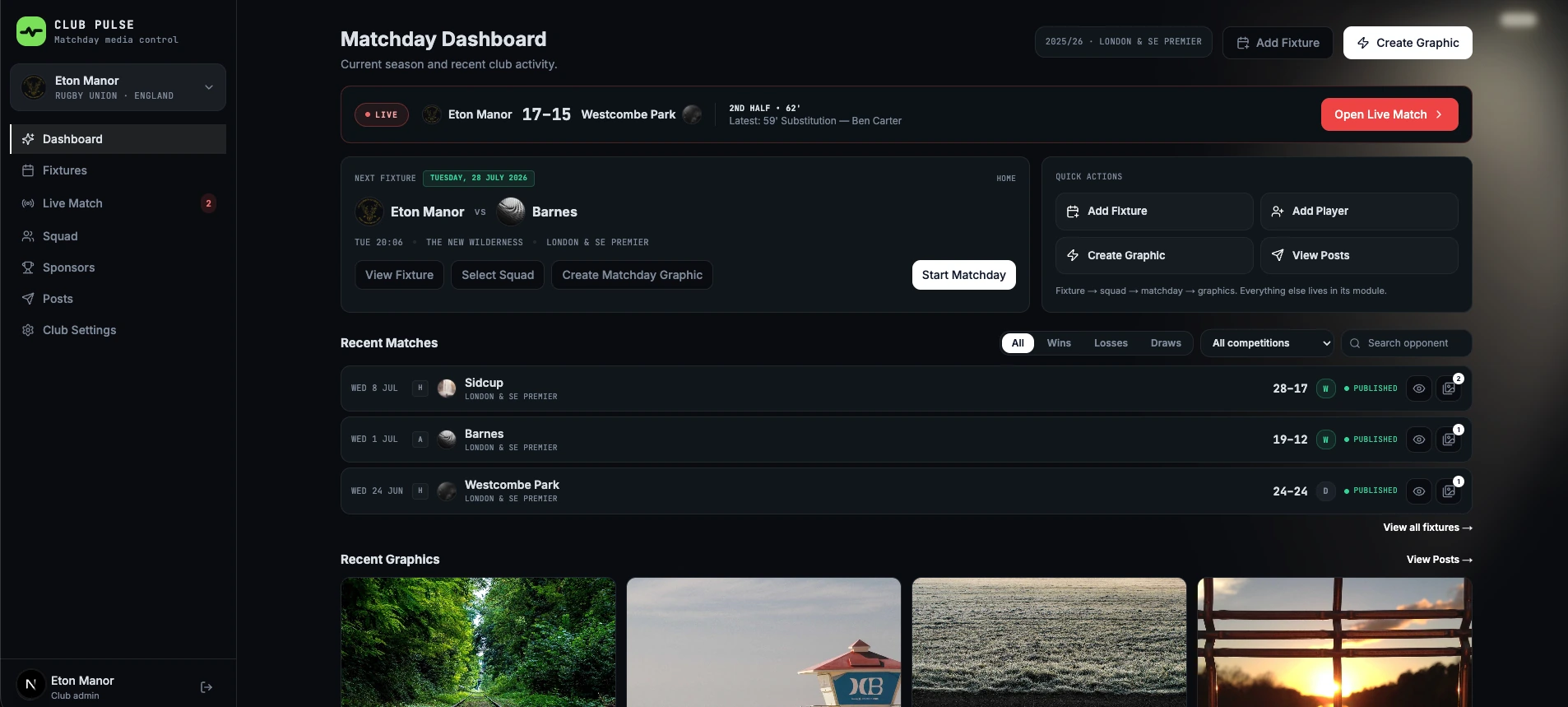
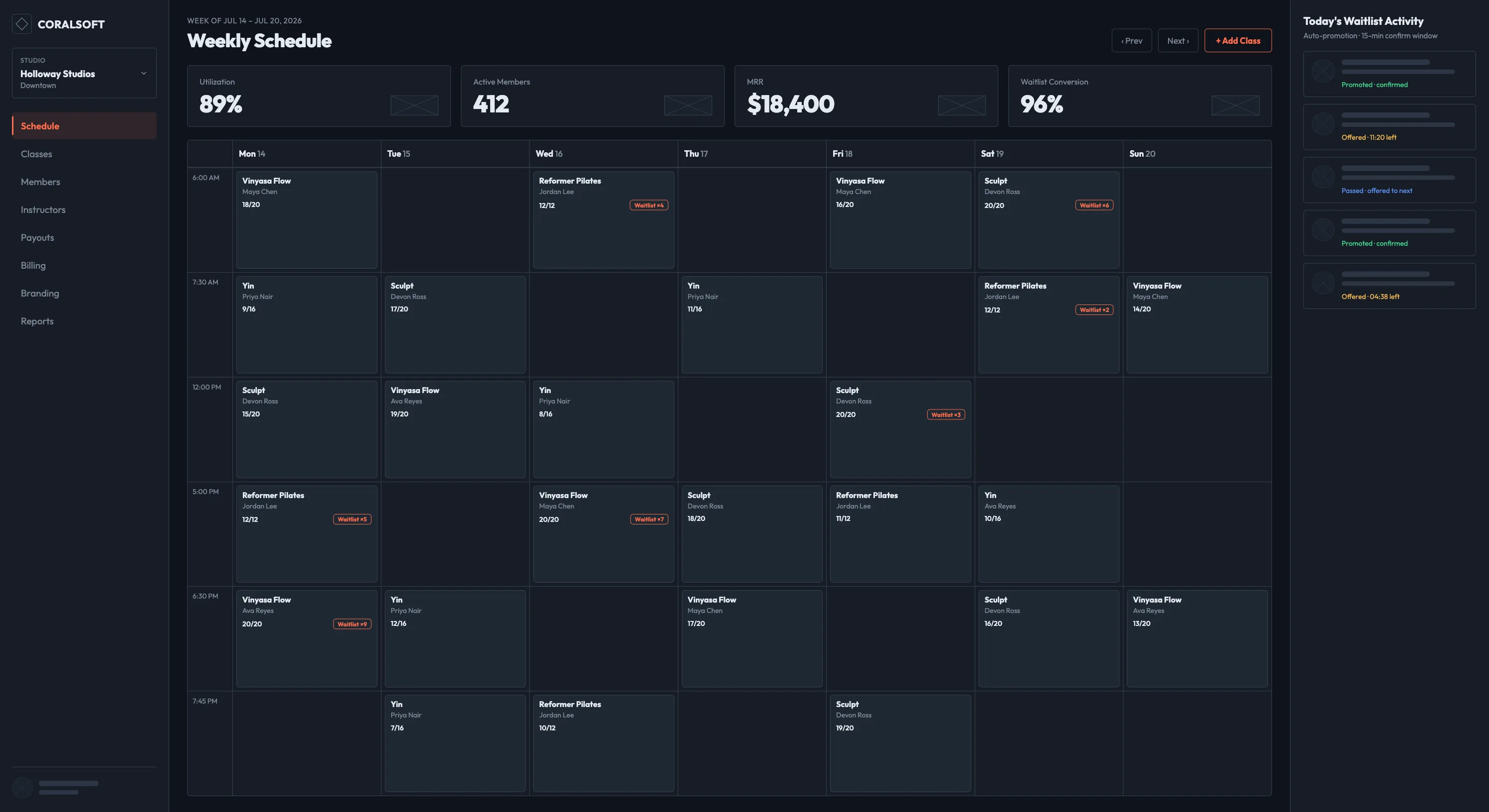
Booking, membership billing, class scheduling, and check-in systems for gyms, studios, and multi-location fitness chains. Built for front-desk speed and back-office reporting in equal measure. *Features: class scheduling · billing · access control*
Team & League Management Systems
03
Roster management, scheduling, scouting, and performance analytics for clubs, academies, and leagues. Role-based access for coaches, players, parents, and administrators.
Wearable-Connected Performance Platforms
04
Products built around continuous biometric data - heart-rate zones, GPS routes, sleep, recovery, and power output - synced from Garmin, Apple Watch, Whoop, Oura, and ANT+/Bluetooth sensors. *Integrations: Garmin · Apple HealthKit · Whoop · Oura · Strava*
Gamified Fitness & Social Challenges
05
Streaks, leaderboards, group challenges, and social accountability loops layered on top of training data - designed to keep users active through weeks four to twelve, where most fitness apps lose their audience.
Sports Marketplaces & Coaching Platforms
06
Two-sided platforms connecting athletes with coaches, trainers, or nutritionists - booking, video sessions, payments, and progress sharing between client and coach. *Model: multi-tenant · revenue share · video sessions*
05 · Architecture
Sports & Fitness Platform Architecture
A production sports or fitness platform is a real-time, multi-source data system. Architecture decisions made early determine whether the platform can absorb a live-event traffic spike or a wearable API change without a rebuild - which is why every custom sports software development services engagement we run starts with architecture, not screens.
Data Ingestion & Normalisation Layer
01
Biometric and activity data arrives from dozens of device types and formats (GPX, FIT, TCX, vendor APIs). A normalisation layer converts everything into a single internal schema before it reaches analytics or user-facing dashboards.
Real-Time & Live Session Layer
02
Live classes, races, and coached sessions require low-latency data - heart-rate streaming, leaderboard updates, and video sync delivered through WebSocket or WebRTC infrastructure built to handle concurrent spikes during scheduled events.
Scalability and Cloud Infrastructure
03
We deploy on AWS, GCP, or Azure using containerised microservices (Docker/Kubernetes). Time-series workloads (biometric streams, session logs) are separated from transactional data (accounts, billing, rosters) to keep both fast at scale.
Reference Sports & Fitness Architecture
Layer
Components
Technology Examples
Presentation
Mobile app, web dashboard, coach/admin panel
React Native, Next.js, Swift/Kotlin
API Gateway
Auth, routing, rate limiting
Kong, AWS API Gateway
Application
Training logic, scheduling, scoring engine
Node.js, Python, Go
Device & Wearable Layer
Sync adapters, biometric normalisation
HealthKit, Health Connect, Garmin/Strava APIs
Data
User data, session/time-series data, analytics
PostgreSQL, TimescaleDB, S3
Infrastructure
Auto-scaling, CI/CD, monitoring
AWS EKS, GitHub Actions, Datadog
Coralsoft's fitness software development work consistently comes back to the same pattern: the features that retain users are rarely the ones that look most impressive in a demo.
Key Features of Modern Sports & Fitness Platforms
Feature Category
Core Capabilities
Advanced Capabilities
Training
Workout library, progress logs
Adaptive programming, AI-generated plans
Biometrics
Heart-rate, steps, calories
Recovery scoring, HRV-based load management
Social & Gamification
Leaderboards, badges
Squad challenges, streak-protection mechanics
Scheduling
Class/session booking
Waitlists, dynamic capacity, live-event scaling
Payments
Subscriptions, one-off bookings
Usage-based billing, coach revenue share
Video & Live
On-demand workout video
Live classes, real-time form feedback
Coaching
Direct messaging, plan sharing
Video review, performance dashboards for coaches
06 · Why Coralsoft
Why Choose Coralsoft as Your Sports App Development Company
Coralsoft specialises in sports and fitness software development. It's the category we keep coming back to, not a checkbox on a broader services list.
Niche Sports & Fitness Expertise
01
We've delivered across consumer fitness, gym operations, team management, and wearable-integrated platforms. We understand training science, biometric data pipelines, and the retention mechanics that separate a fitness app people open once from one they open daily - not just the engineering behind it.
Real-Time, Scalability-First Architecture
02
Live classes, race-day traffic, and wearable sync spikes are treated as expected load, not edge cases. We separate time-series and transactional workloads and architect for multi-device sync from the first sprint.
Retention-Driven UX
03
Weekly active usage is the metric that actually matters in fitness. Our UX process is built around behaviour science - habit loops, progress visibility, and social accountability - rather than screens that simply look complete.
End-to-End Sports Software Delivery
04
From MVP scoping to post-launch optimisation, we run the full lifecycle of a sports custom software development services engagement - architecture, compliance, device integration, and the analytics loop that tells you what to build next.
07 · Selected work
Related case studies
Production-grade products. Real users. Measurable outcomes.
We match the commercial structure to your funding stage, delivery risk, and in-house capability.
Dedicated Team
01
A senior engineer, sports-tech product specialist, and UX designer embedded in your product cycle. Ideal for funded fitness startups, gyms, and federations building long-term digital infrastructure.
// embedded teamMost popular
Fixed Price
02
Scoped deliverable, fixed budget, guaranteed timeline. We absorb scope risk. Best suited to well-defined MVP builds where budget approval requires certainty.
// scoped deliveryRisk on us
Time & Materials
03
Pay for hours of actual engineering. Maximum flexibility for evolving product briefs or research-heavy builds - such as early wearable integrations - where requirements shift as you learn.
// flexibleFlexible
09 · FAQs
FAQs
Answers to the questions we hear most before kick-off.
Contact
Performance Has No Off-Season, Build the Platform Behind It
Tell us your use case. We'll map the right architecture, identify integration dependencies, and give you a realistic cost estimate - in one 30-minute call. No obligation.
30-minute discovery call
Architecture & integration map
Realistic cost estimate
A focused MVP - covering onboarding, workout tracking, and one wearable integration - typically starts from $8K. A production-grade fitness software development project with subscriptions, live classes, and multi-device sync starts from $30K. Enterprise sports platforms with custom AI training logic, multi-language support, and league/team management start from $50K. Primary cost drivers are wearable integration scope, real-time/live-session infrastructure, the number of user roles, and payment complexity.
A focused MVP typically takes 8–12 weeks from kickoff to launch, covering onboarding, core training/tracking features, and one wearable integration. A production-grade platform with subscriptions, live sessions, and multi-device sync runs 4–6 months. Enterprise sports software with custom AI training logic, multi-language support, and team/league management typically takes 6–9 months. Timelines depend most on the number of integrations, real-time infrastructure requirements, and how many user roles the platform has to support.
At minimum: authentication and user profiles, workout or session logging, progress tracking and analytics, and a payments/subscription layer. Most competitive products also add wearable sync, push-based training reminders, and some form of social accountability - leaderboards, streaks, or group challenges - since these are what keep weekly active usage from dropping off after the first month. Platforms built for gyms, teams, or coaches typically need role-based access (coach, athlete, admin, parent), scheduling, and reporting on top of that core set.
We build sync layers for Garmin, Apple Watch (via HealthKit), Whoop, Oura, Fitbit, and Android devices through Health Connect, along with GPS-based cycling and running computers over ANT+ and Bluetooth LE. We also integrate with Strava for activity import/export and with generic FIT/GPX/TCX file formats for devices without a direct API. Each integration is normalised into a single internal data schema so training logic and analytics don't need to know which device the data came from.
Live classes, races, and scheduled group sessions create short, predictable traffic spikes rather than steady load, so we design for burst capacity rather than average capacity - auto-scaling groups sized for peak concurrent sessions, WebSocket or WebRTC infrastructure for real-time leaderboard and video sync, and time-series data stores kept separate from transactional data so a spike in session logging doesn't slow down billing or account lookups. Load testing against expected live-event concurrency is a standard step in our QA phase, not an afterthought added post-launch.